Blog
Kosintec-Commercial digital signage display manufacturer providing OEM&ODM services for over 13 years.
Language
Kosintec-Commercial digital signage display manufacturer providing OEM&ODM services for over 13 years.
Digital menu boards can completely change the look and efficiency of a restaurant — but only when they’re done properly.
A lot of restaurant owners invest in screens expecting an instant upgrade, then wonder why customers still seem confused, ordering feels slow, or the displays simply don’t attract attention anymore after a few weeks.
Below are some of the most common mistakes restaurants make with digital menu boards, along with practical ways to avoid them.
1.Why do some digital menu boards look messy and hard to read?
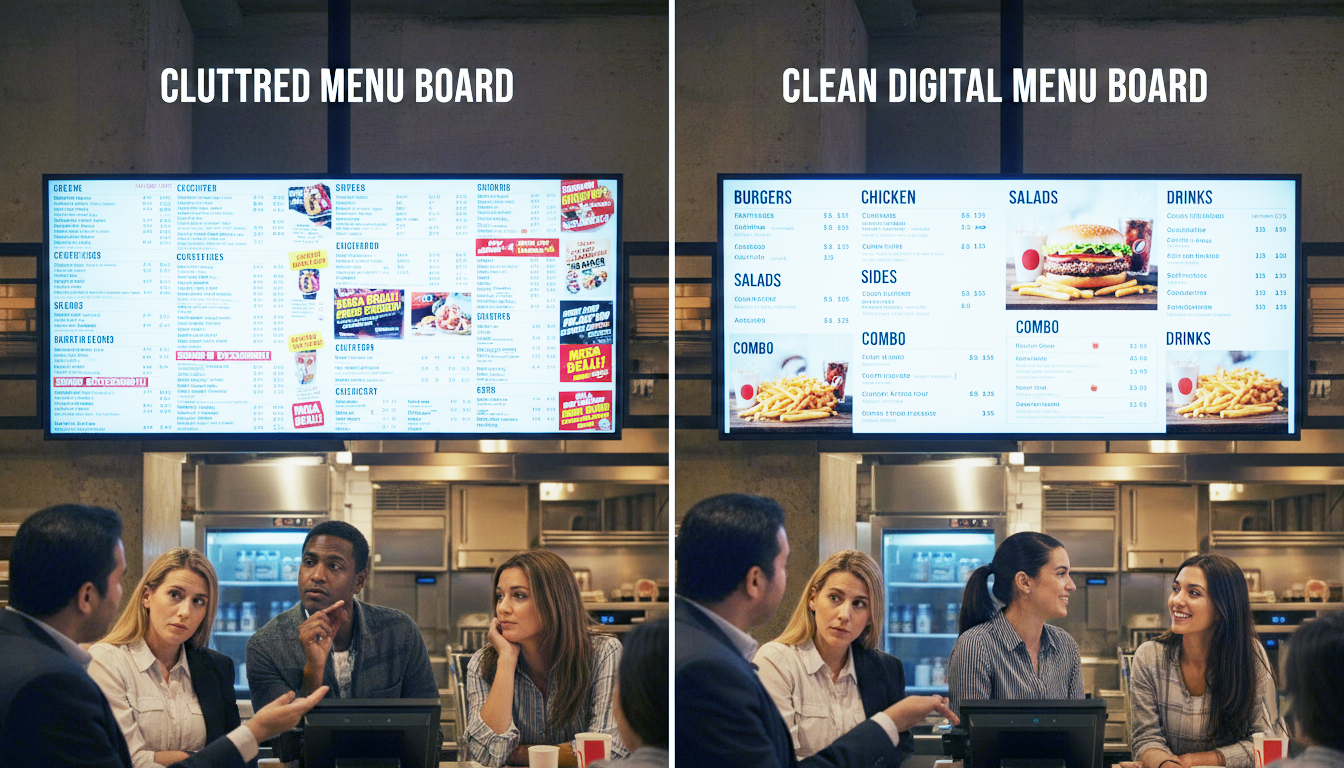
One of the biggest mistakes is treating a digital screen like a printed poster.
Many restaurants simply copy their old printed menu onto a TV screen. The result usually looks overcrowded and difficult to read, especially during busy hours.
Common problems include:
·Tiny text
·Too many menu items
·Weak visual hierarchy
·Overloaded pricing
·No clear focus point
Customers normally decide what to order within a few seconds. If the menu feels confusing, ordering slows down and lines get longer.
A cleaner layout almost always performs better.
Good digital menu boards usually focus on:
·Large typography
·Clear categories
·Highlighted best sellers
·Simple combo options
·Easy scanning from a distance
2. Why do some restaurant screens become unreadable during the daytime?
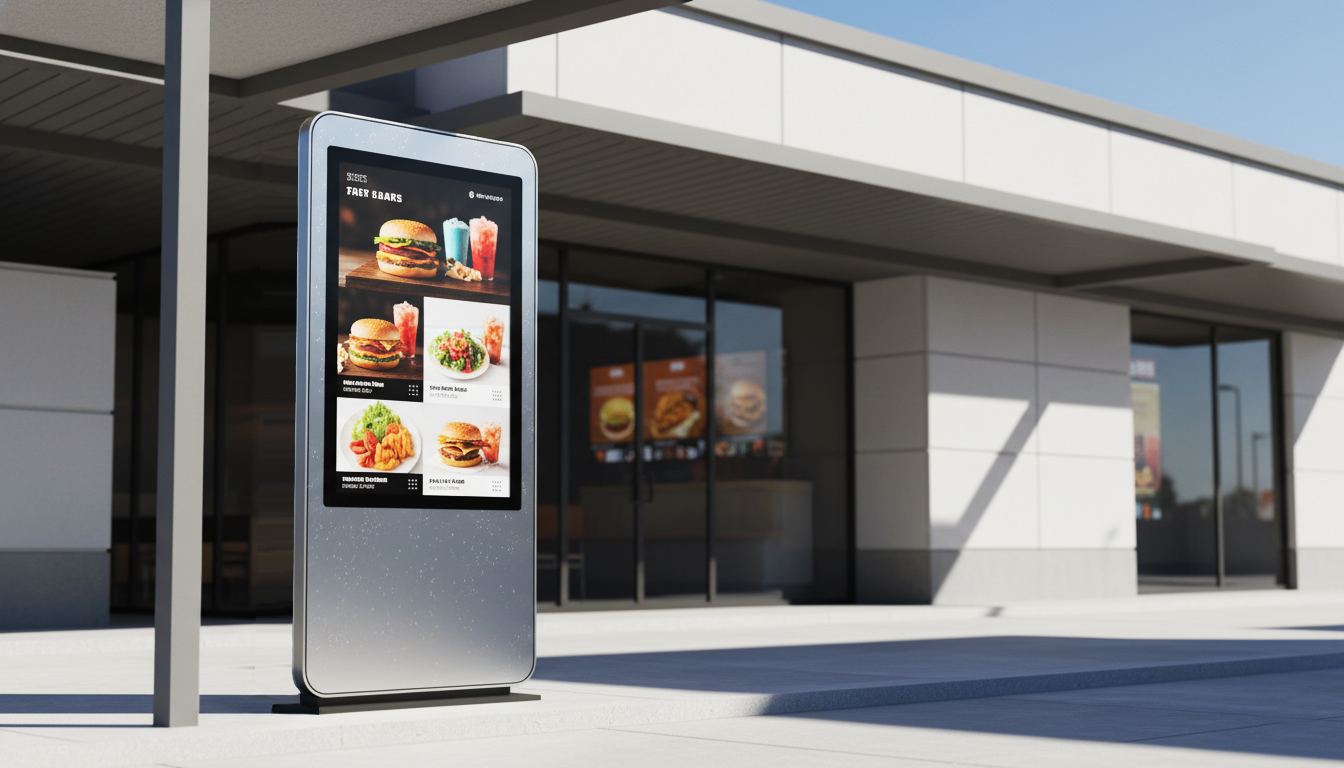
This usually comes down to brightness and installation environment.
A display may look great during setup inside a showroom, but completely fail once it’s placed near sunlight or large windows.
This is extremely common in:
·Drive-thru areas
·Storefront windows
·Outdoor pickup stations
·Bright indoor restaurants
Low-brightness consumer TVs often struggle in commercial environments.
Typical issues include:
·Reflections
·Washed-out colors
·Poor contrast
·Difficult readability
For restaurants, visibility matters more than ultra-high resolution.
A properly designed commercial high-brightness display can make a huge difference in customer attention and readability.
3. Is too much animation bad for digital menu boards?
Absolutely.
Many restaurants get excited about motion graphics and end up creating screens that feel overly busy and distracting.
Too many effects can actually hurt the customer experience.
Common mistakes include:
·Flashing promotions
·Fast transitions
·Multiple videos playing at once
·Constant moving backgrounds
Instead of helping customers order faster, it creates visual fatigue.
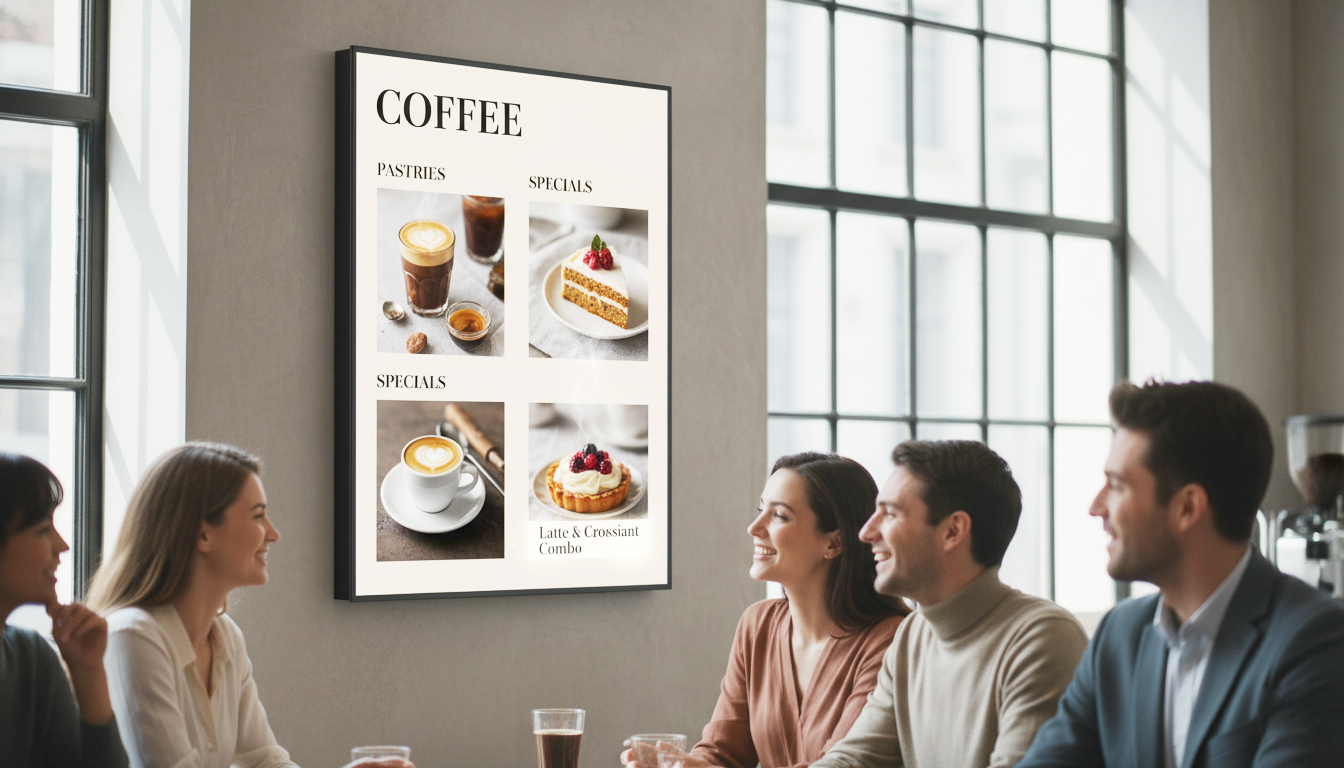
The best-performing menu boards usually use subtle movement only where necessary.
Simple animations often work better, such as:
·Steam rising from food
·Slow zoom-in effects
·Smooth transitions
·Small highlight animations
Good motion should support the content — not overpower it.
4. How do digital menu boards affect customer flow?
Digital signage isn’t just about making a restaurant look modern.
It directly affects how quickly customers make decisions.
A poorly organized menu can slow down the entire ordering process.
For example:
·Customers take longer to find combo meals
·Promotions get ignored
·People hesitate because there are too many choices
·Queues become longer during peak hours
A well-structured menu naturally guides customers through the ordering
process.
Most effective layouts usually:
·Highlight best-selling items first
·Make combo upgrades easy to notice
·Keep pricing simple
·Separate categories clearly
·Reduce unnecessary clutter
The goal is not only visual design.
The goal is helping customers decide faster.
5. Why do many restaurants stop getting results from digital signage after installation?
Because they stop updating the content.
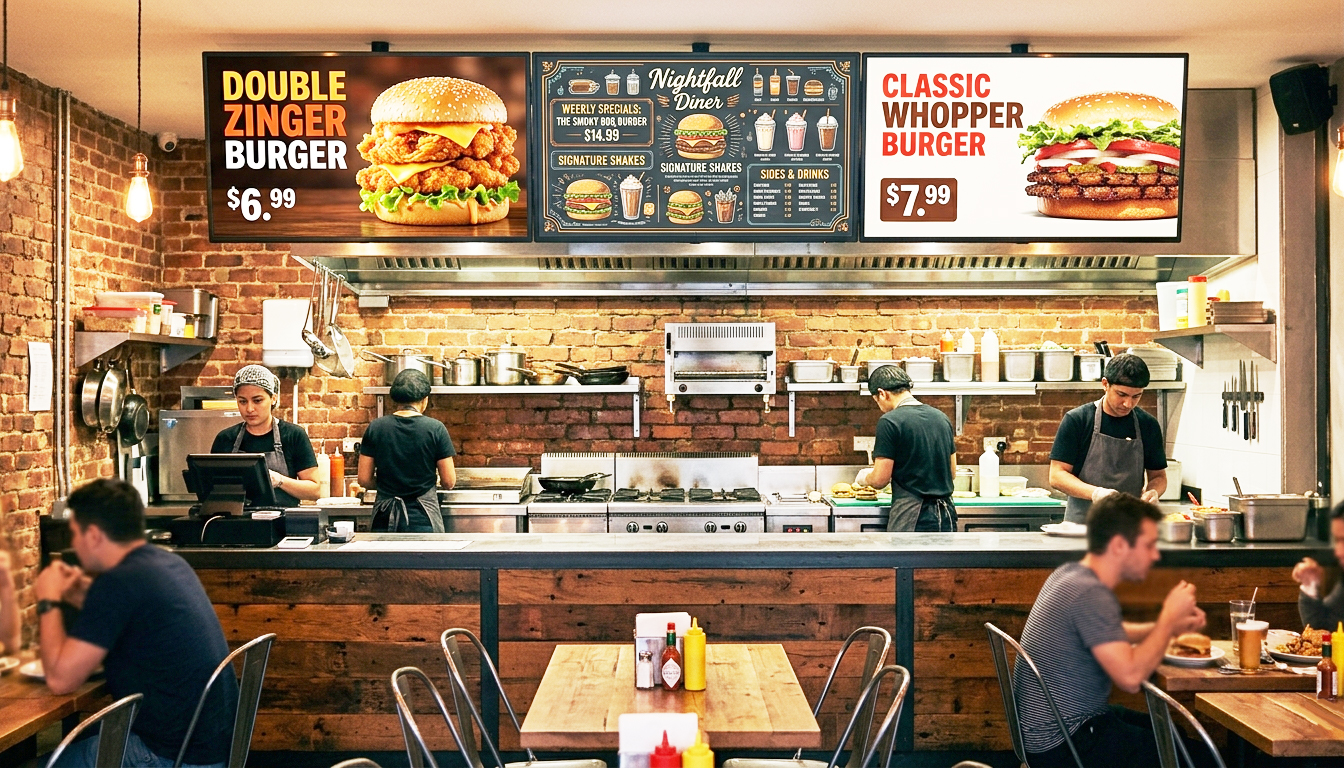
One of the biggest advantages of digital signage is flexibility, but many restaurants install screens and leave the same content running for months.
Over time, customers stop noticing it.
Restaurants should regularly update:
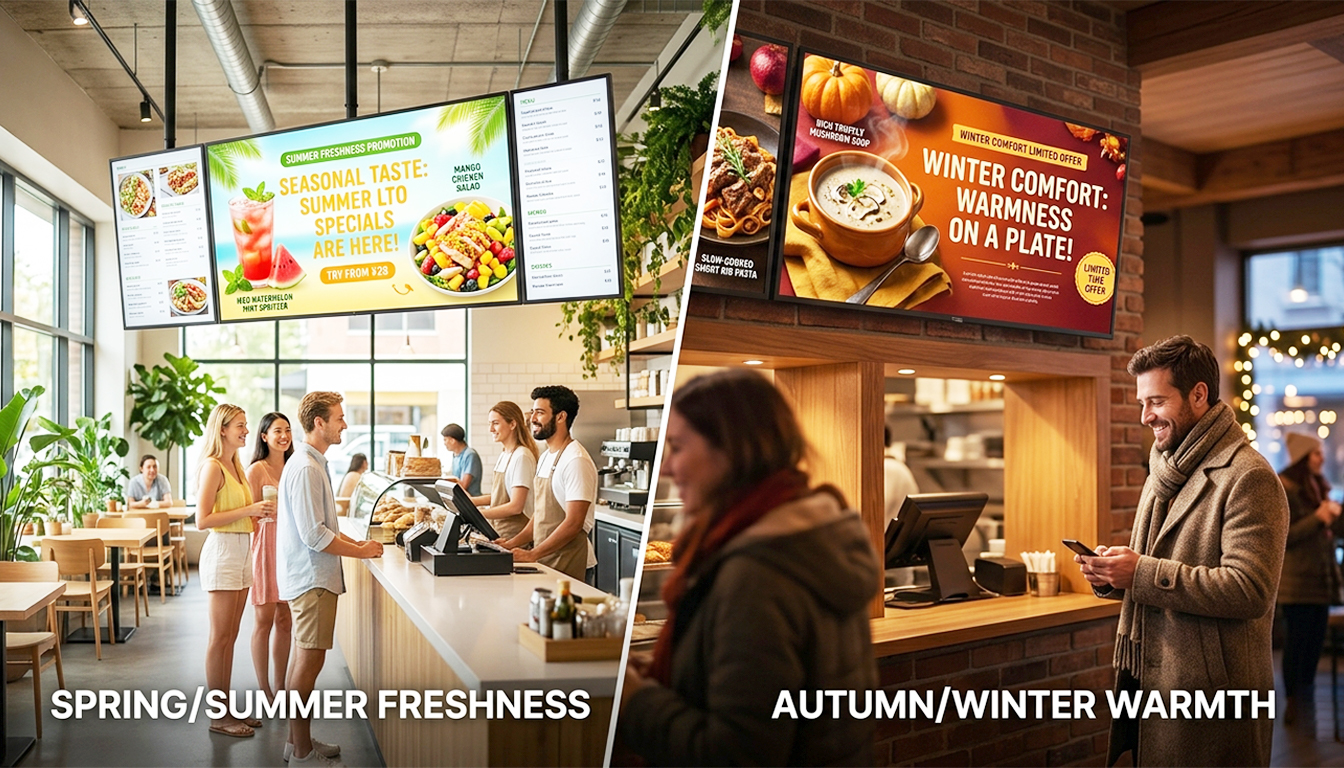
·Seasonal items
·Limited-time promotions
·Holiday campaigns
·Breakfast/lunch/dinner menus
·Local specials
·New product launches
Fresh content keeps the display engaging and makes the restaurant feel more active and modern.
Content quality also matters more than many people realize.
Professional food visuals can dramatically improve customer attention compared to low-quality photos or outdated designs.
People usually notice visuals before they read text.
Final Thoughts
Digital menu boards are no longer just decorative screens.
When done properly, they can improve:
·Customer experience
·Ordering speed
·Upselling opportunities
·Store atmosphere
·Brand perception
The restaurants getting the best results are usually the ones focusing on both hardware and content together.A great screen alone is not enough.
Good layout design, strong visuals, and clear communication are what actually make digital signage effective.
If you're planning a restaurant digital signage project, taking time to avoid these common mistakes can save a lot of frustration later.
Any questions?please feel free to contact us.
sales001@kosintec.com
KOSINTEC as experienced digital signage display manufacturer which specialized in custom LCD displays and stretched bar LCD since 2013.
Copyright © 2026 Shenzhen kosintec Co., Ltd - All Rights Reserved.

