Info center
Kosintec-Commercial digital signage display manufacturer providing OEM&ODM services for over 13 years.
Language
Kosintec-Commercial digital signage display manufacturer providing OEM&ODM services for over 13 years.
One of the first questions restaurant owners ask before upgrading to digital signage is:
“How much does a digital menu board actually cost?”
The short answer is: It depends on the screen size, brightness, installation method, software, and whether you’re building a simple indoor setup or a fully commercial restaurant system.
Some small setups cost only a few hundred dollars.Large commercial installations can easily go into the thousands.
Below is a practical breakdown of what affects digital menu board pricing and what restaurants should realistically expect.
1. What is the average cost of a digital menu board?
For most restaurants, a standard digital menu board setup usually falls somewhere between:
·$250–$1,000 for a basic single-screen indoor setup
·$1,000–$5,000+ for commercial multi-screen restaurant systems
·Higher for outdoor or drive-thru solutions
The final price mainly depends on:
·Screen size
·Brightness level
·Screen resolution
·Commercial vs consumer-grade display
·Touchscreen functionality
·Mounting structure
·Media player/software
·Installation requirements
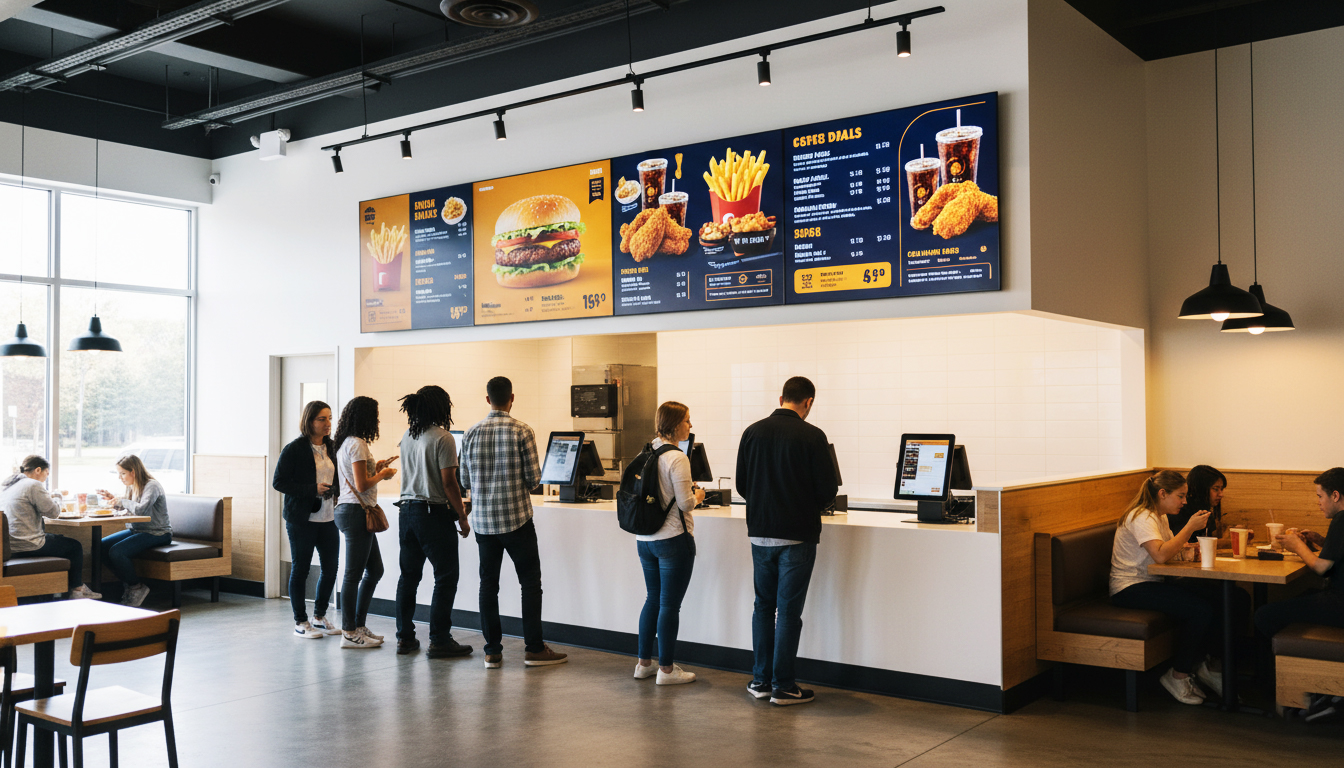
A simple coffee shop menu board will cost much less than a large outdoor fast-food drive-thru display.
2. Why are commercial digital menu boards more expensive than regular TVs?
This is something many restaurant owners underestimate.
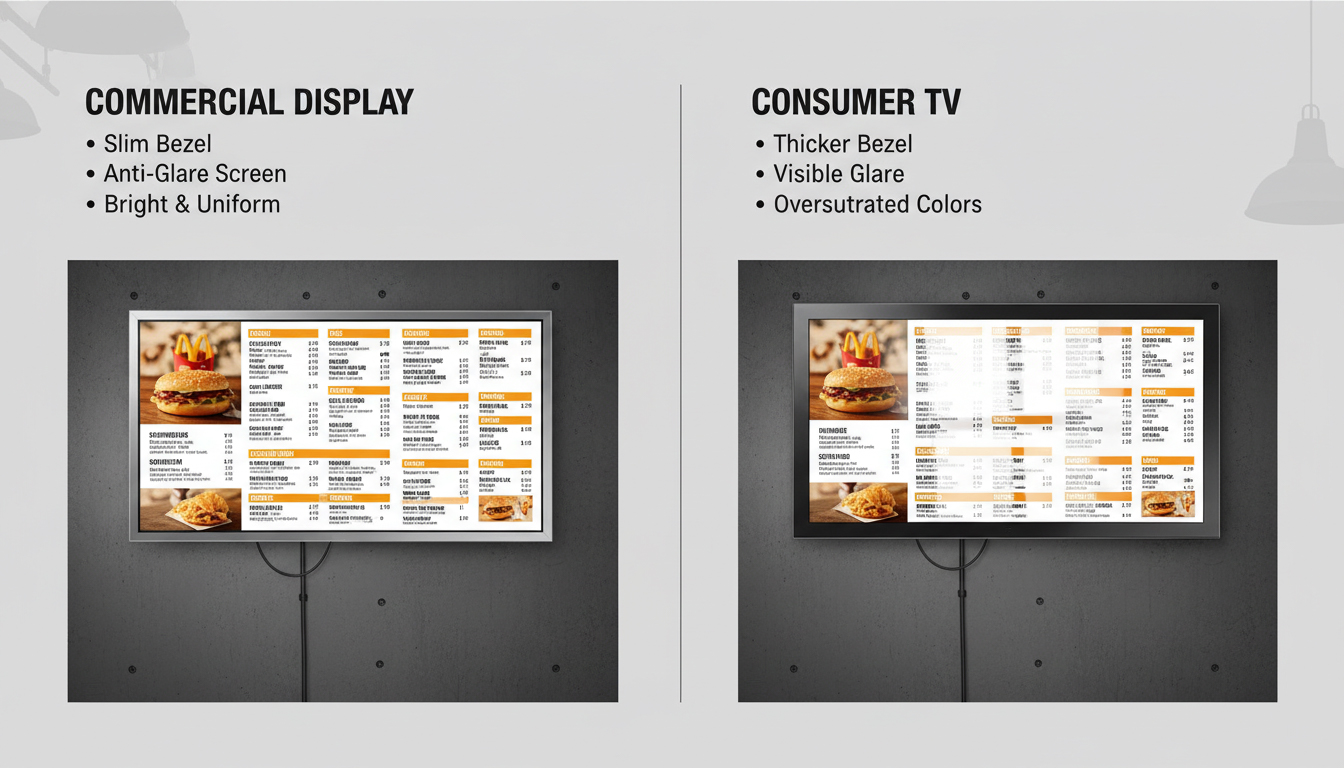
At first glance, a consumer TV and a commercial display may look similar.
But they are built for completely different environments.
Commercial digital signage displays are designed for:
·Long operating hours
·Better heat management
·Higher brightness
·Wider viewing angles
·Continuous daily use
·Remote content management
Regular TVs are mainly designed for home entertainment.
Restaurants often run screens 10–18 hours a day, sometimes even 24/7.
Using consumer TVs in commercial environments can lead to:
·Overheating
·Burn-in
·Reduced lifespan
·Poor brightness performance
That’s why commercial displays typically cost more upfront but perform better long term.
3. Does screen size affect pricing a lot?
Yes — screen size has a major impact on cost.
Larger screens usually mean:
·Higher panel costs
·Stronger mounting structures
·Increased shipping costs
·More power consumption
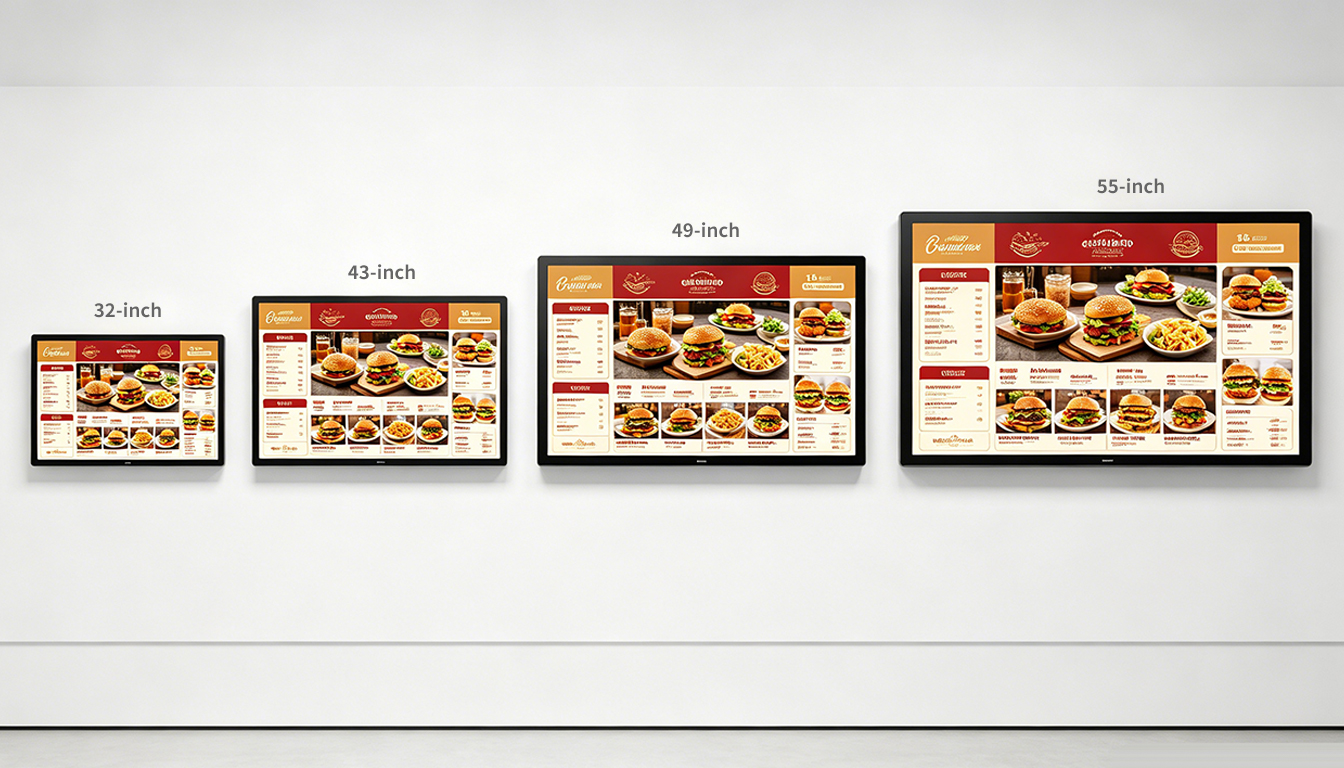
Common restaurant menu board sizes include:
| Screen Size | Typical Application |
| 32"–43" | Small cafés / bubble tea shops |
| 49"–55" | Standard restaurant menu boards |
| 65"+ | Large QSR and retail environments |
For most restaurants, 49" or 55" displays are the most common balance between visibility and cost.
The ideal size also depends on viewing distance.a menu that looks perfect up close may become unreadable from the ordering line.
4. Do digital menu boards require CMS ?
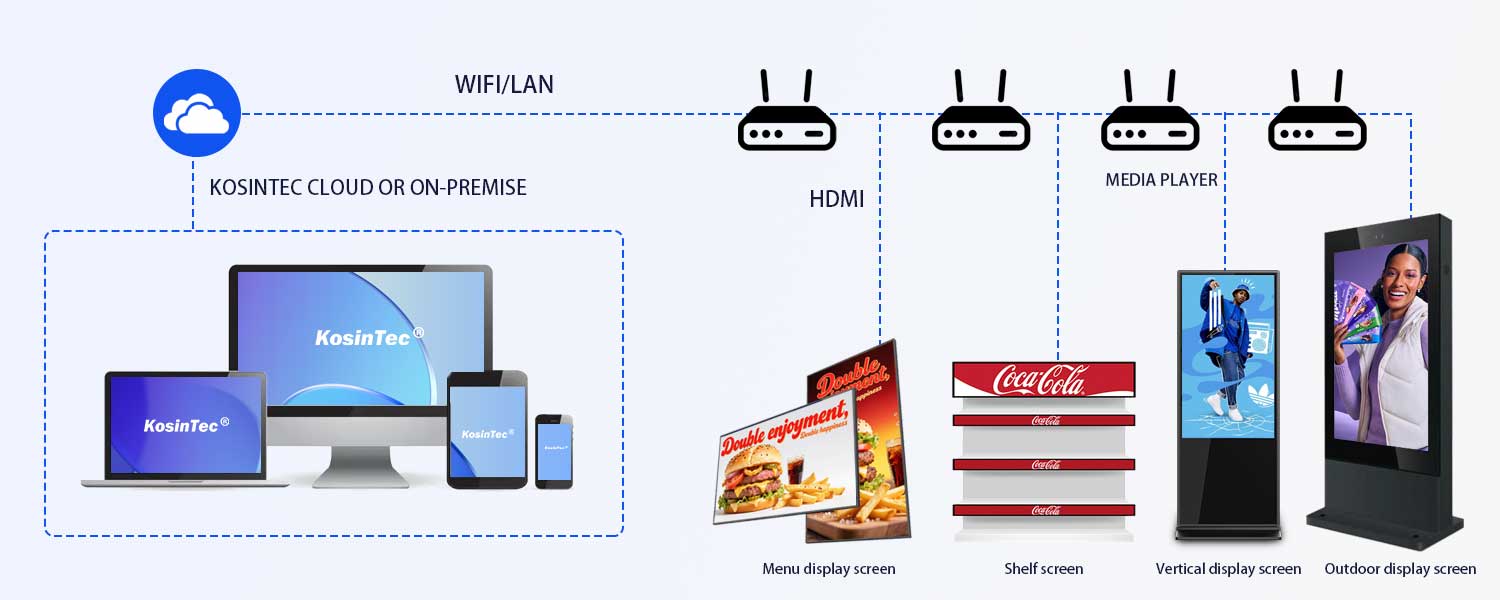
Some restaurants use simple USB plug-and-play systems.
Others use cloud-based digital signage platforms.
CMS usually offer features like:
·Remote content updates
·Multi-screen synchronization
·Scheduling
·Dynamic promotions
·Daypart menus
·Centralized management
Kosintec's digital menu boards come with a free CMS
For multi-location restaurant chains, CMS saves time and keeps branding consistent.
Final Thoughts
Digital menu board pricing can vary a lot depending on the project type.
For some restaurants, a basic indoor setup is enough.
Others may need fully customized commercial solutions for high-traffic environments.
The most important thing is choosing a system that matches:
·Your restaurant size
·Operating environment
·Customer flow
·Branding style
·Long-term business goals
In many cases, investing slightly more in commercial-grade equipment upfront can save money and maintenance headaches later.
If you are interested in the digital menu boards, please feel free to contact us.
sales001@kosintec.com
KOSINTEC as experienced digital signage display manufacturer which specialized in custom LCD displays and stretched bar LCD since 2013.
Copyright © 2026 Shenzhen kosintec Co., Ltd - All Rights Reserved.

