Blog
Kosintec-Commercial digital signage display manufacturer providing OEM&ODM services for over 13 years.
Language
Kosintec-Commercial digital signage display manufacturer providing OEM&ODM services for over 13 years.
Digital signage displays have become a familiar part of modern business environments.
From retail storefronts to corporate lobbies and transit hubs, these screens communicate information dynamically and visually. Choosing the right display requires understanding not only technical specifications, but also the purpose and context in which the screen will operate.
This guide explains the practical considerations that help businesses select digital signage that performs effectively and supports communication goals.

Digital signage replaces static posters with flexible digital content — videos, promotional messages, navigation maps, or live updates. Businesses rely on displays to capture attention, deliver information quickly, and strengthen brand presence.
The first step in choosing a display is defining its intended role: attracting visitors, informing customers, enabling interaction, or reinforcing brand identity.
Clear goals provide direction when comparing different technologies and configurations.

Environment is one of the most important factors when selecting a display.
Indoor environments typically favor LCD or OLED commercial panels that deliver sharp images and consistent color under controlled lighting.
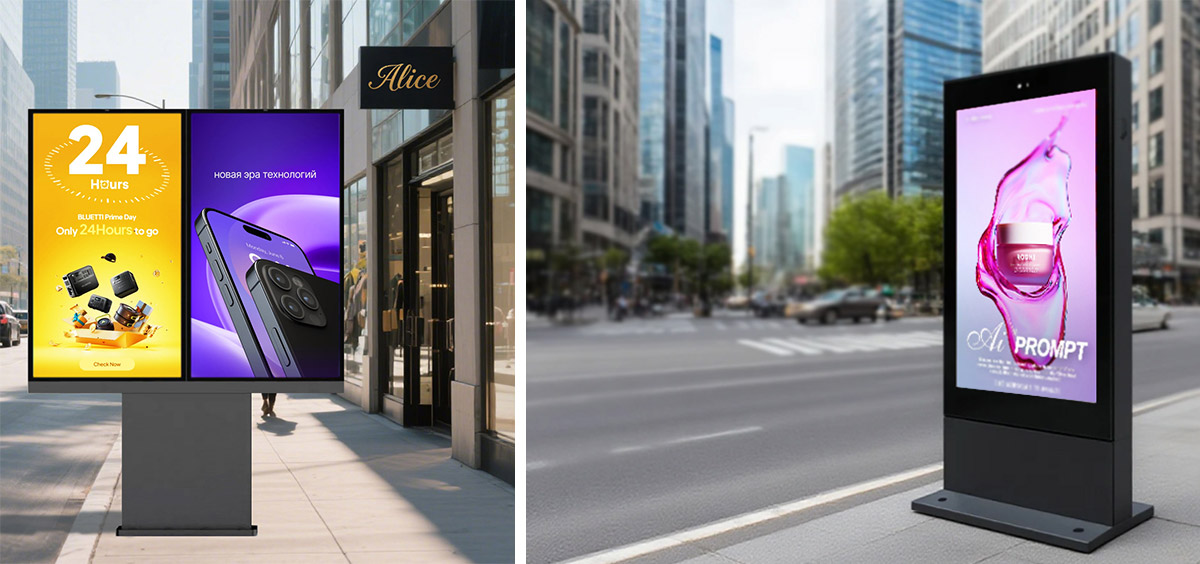
Outdoor installations require higher brightness, weather resistance, and durability, often making LED displays the preferred option.
Storefront windows represent a special category, requiring high brightness to remain visible in daylight.
Interactive touch displays add another layer of functionality by allowing users to browse information or place orders.
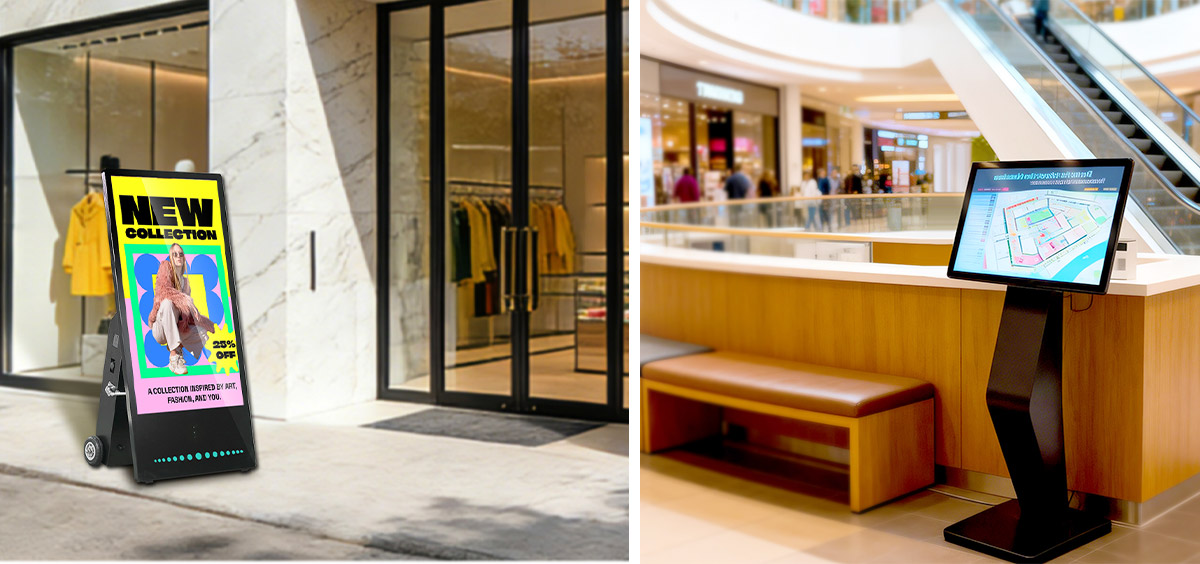
Screen size and resolution should match viewing distance and audience scale.
Large public areas demand larger displays or multi-screen configurations, while smaller spaces benefit from compact high-resolution panels. High resolution ensures detail for close viewing, especially for product imagery or branding visuals.
Balancing size and clarity improves visibility and enhances audience experience.
Content strategy influences hardware decisions. Modern signage systems often integrate software platforms that enable remote updates, scheduling, and data integration. Businesses managing multiple screens benefit from centralized control and cloud-based tools. Ensuring compatibility between hardware and software systems
prevents workflow disruptions later.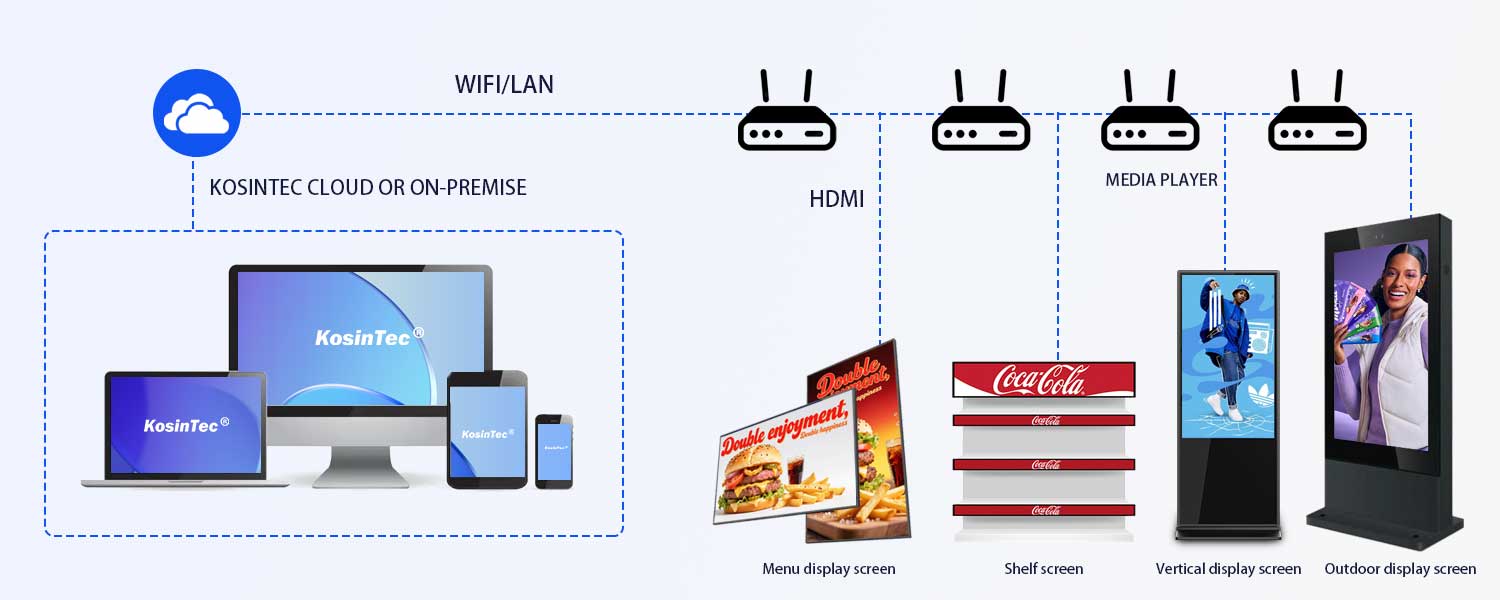
Displays are communication tools, and their value depends heavily on the quality and adaptability of content.
Durability and lifecycle considerations are essential. Commercial displays are designed for extended operation, sometimes running continuously. Reliable cooling systems, quality components, and accessible maintenance options help minimize downtime. Budget planning should account for installation, energy use, and long-term service needs.
Choosing digital signage ultimately means aligning technical features with communication objectives.
Understanding audience needs, environmental conditions, and content workflows ensures displays remain both visible and meaningful. When technology and purpose work together, digital signage becomes a powerful medium for engagement and information sharing.
Commercial Display Manufacturer.
SHENZHEN KOSINTEC CO., LTD.
www.kosintec.com
KOSINTEC as experienced digital signage display manufacturer which specialized in custom LCD displays and stretched bar LCD since 2013.
Copyright © 2026 Shenzhen kosintec Co., Ltd - All Rights Reserved.

